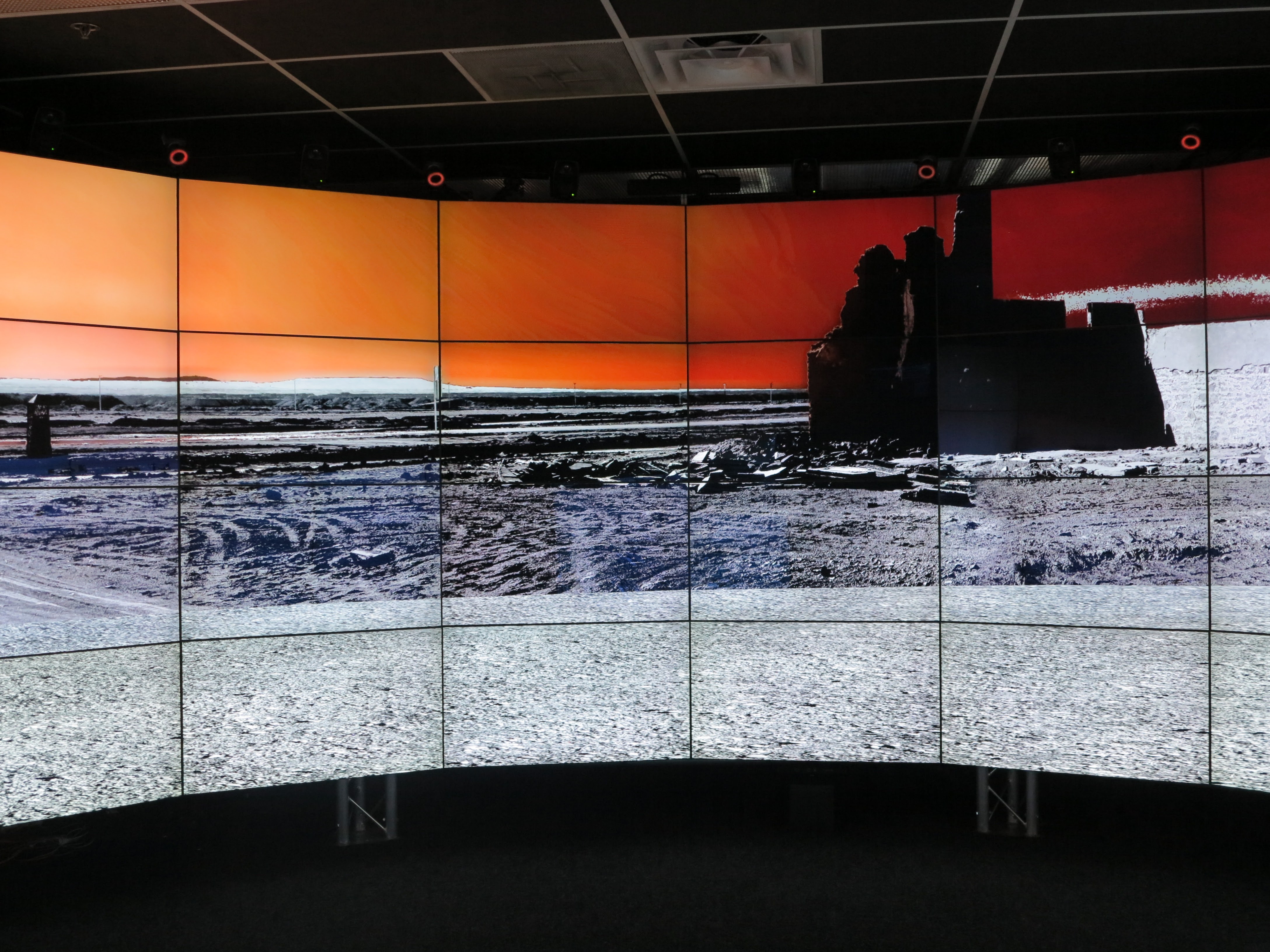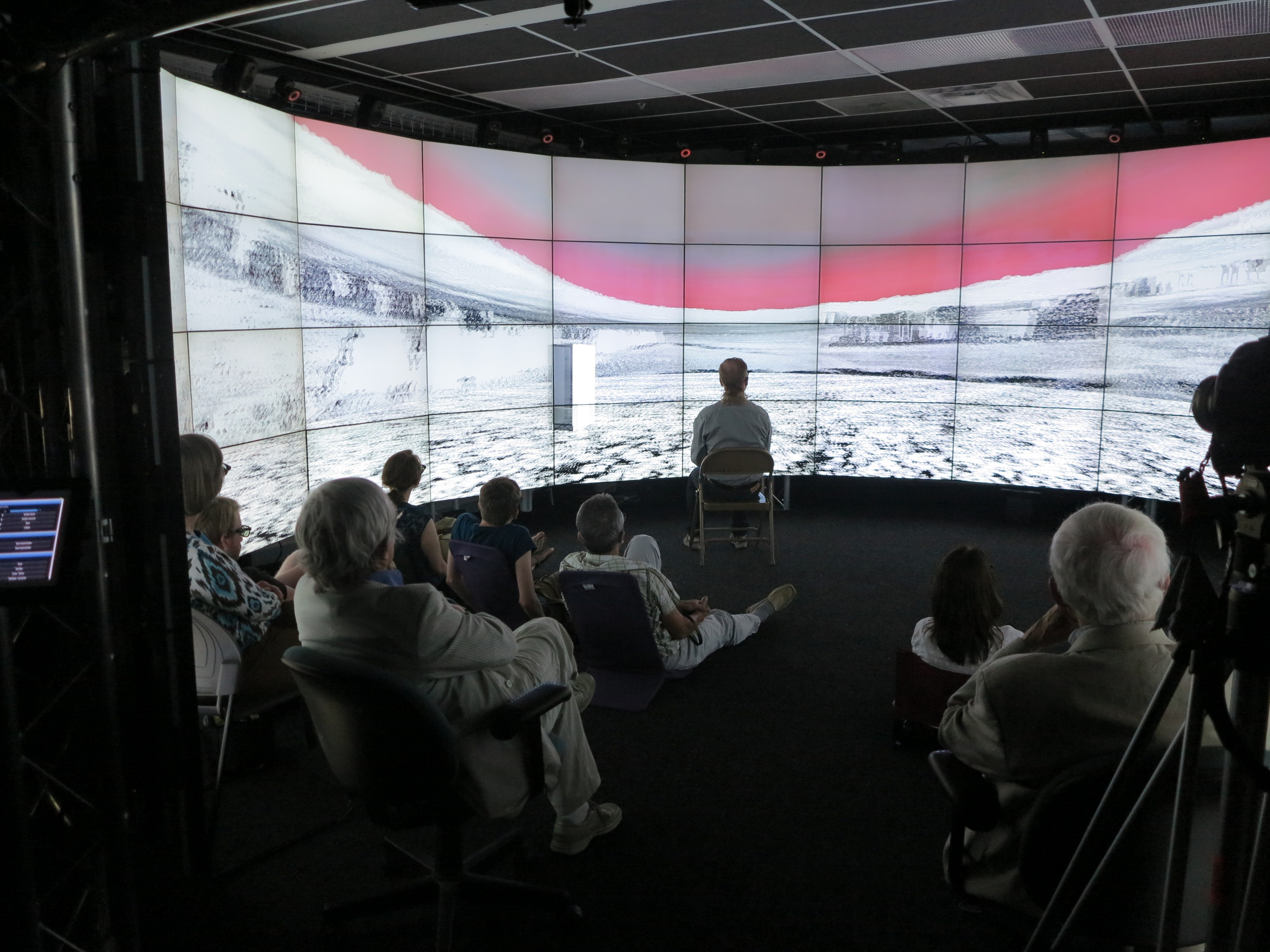
Hearts and Minds: The Interrogations Project is an
interactive, immersive, and cinematic environment that draws users
into the haunting memories of ordinary American soldiers who became
torturers in the course of serving their country. The project
foregrounds veterans’ testimonies of enhanced interrogation
practices and human rights abuses during the Iraq War and was
developed through a four-university collaboration at the Electronic
Visualization Lab at the University of Illinois Chicago.
Introduction
Hearts and Minds: The Interrogations Project is an immersive
digital media project that foregrounds veterans testimonies of US
military interrogation practices and human rights abuses during the
Iraq War, often by young and ill-trained soldiers who never entered
the military expecting to become torturers and who find themselves
struggling to reconcile the activities they were asked to do.
Drawing upon extensive interviews with veterans carried out by
political scientist John Tsukayama following the Abu Ghraib accounts
of abuse, this project is unique in building understanding of how a
military with a just vision of its practices might allow the
conditions for human rights abuses to occur.
The hybrid project was developed through a unique collaboration
between filmmakers, artists, scientists, and researchers from four
universities and developed in the immersive 3D CAVE2 at the
University of Illinois-Chicago for exhibition, educational
institutions, museums and libraries, and distribution using
tablets/ipads and Oculus Rift.
The Virtual Environment
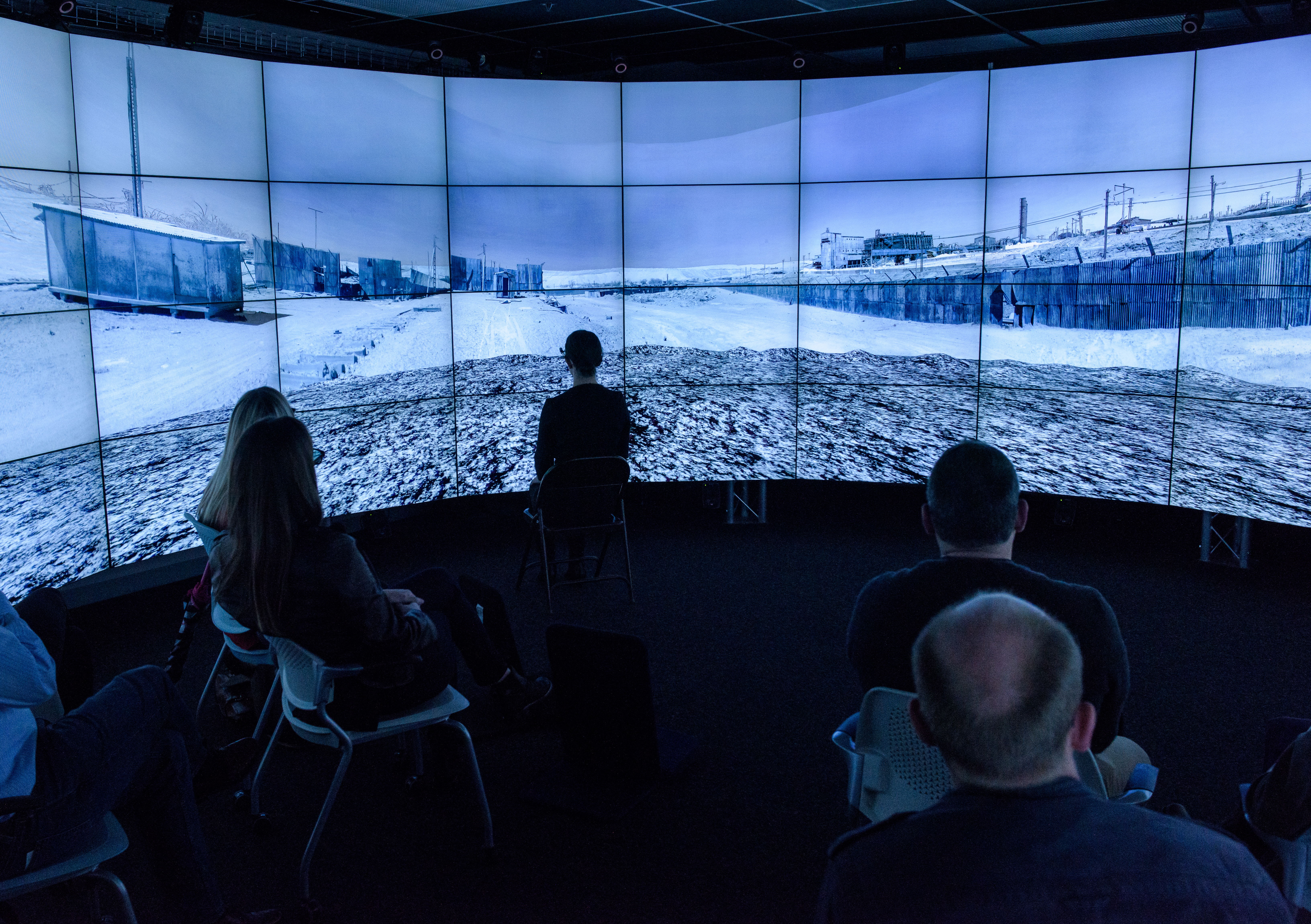
Hearts and Minds: The Interrogations Project was originally
developed at the Electronic Visualization Lab (EVL) at the
University of Illinois Chicago for the CAVE2, a next-generation
large-scale virtual-reality panoramic environment providing 3D
stereoscopic content at a scale matching human visual acuity. Here,
the immersive 3D environment is intended to produce an affective
space for interpretation, serving as a dispositif for enacting
individual and cultural memory of institutionalized atrocity.
The project begins in a reflective temple space with four doors
opening onto ordinary American domestic spaces: a boy’s bedroom, a
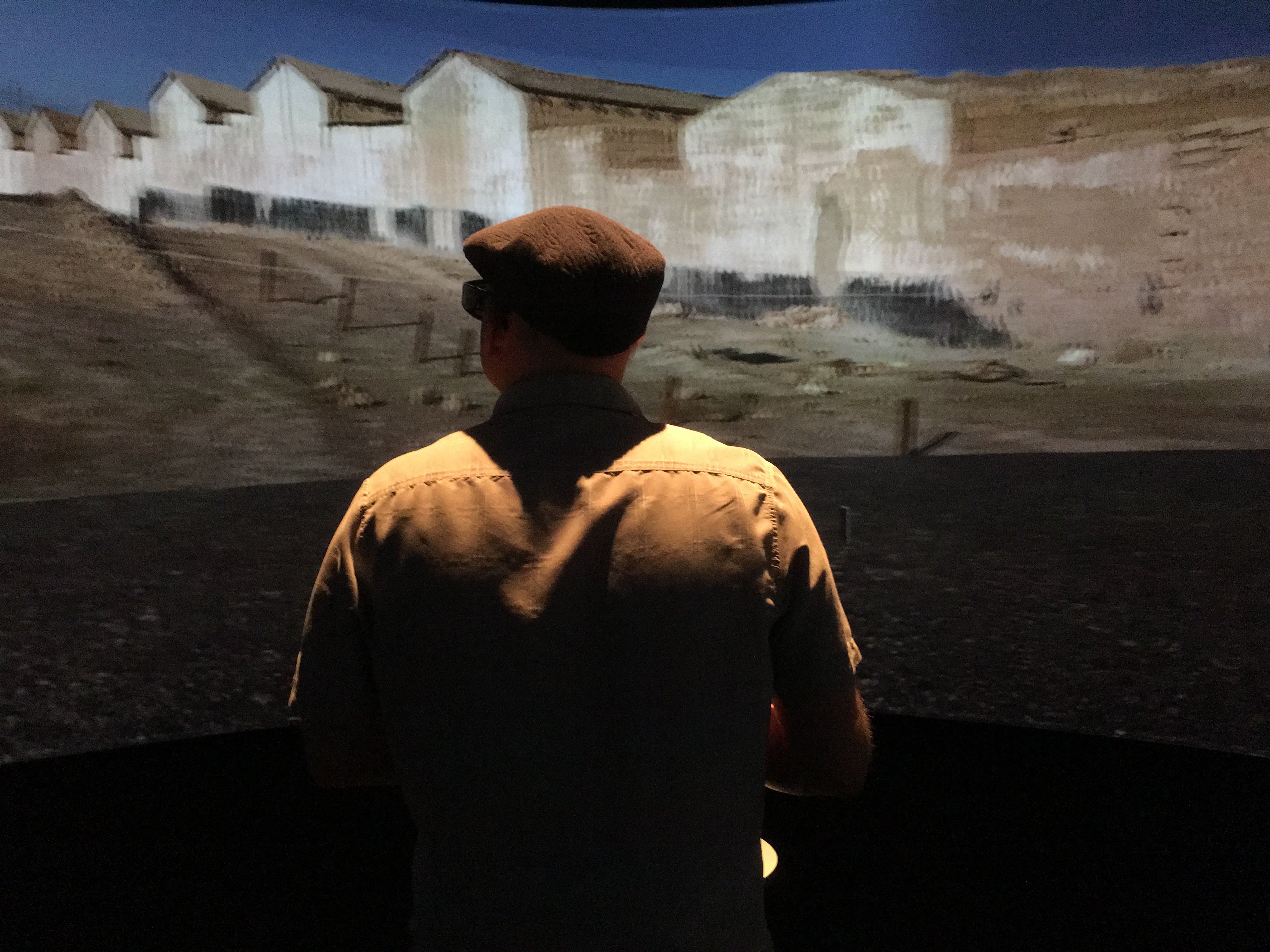
family room, a suburban back yard, and a kitchen. Users navigate
the environment with a wand functioning as a 3D mouse. The virtual
scene updates continuously according to head and arm trackers, so
the 3D view remains focalized through the participant’s perspective.
As viewers move through the rooms, objects such as a toy truck, a
Boy Scout poster, or a pair of wire cutters can be activated. When
triggered, the walls fall away, revealing a surreal desert panorama
while one of the voice actors recounts memories metaphorically tied
to the object. These objects work much like hyperlinks, carrying
viewers through domestic spaces and interior landscapes of soldiers
transformed by traumatic experience.
The work extends disturbing but vital narratives based on actual
veterans’ testimonies and offers a different affective experience of
oral history through visual and auditory immersion. Rather than
representing “big data,” visualization technologies are used here to
narrativize a complex contemporary issue and create a platform for
discussion and debate about interrogation methods and their effects
on detainees, soldiers, and society.
Production Team
- Roderick Coover — Filmmaker/Artist, Temple University
- Scott Rettberg — Writer, University of Bergen
- Daria Tsoupikova — Computer Artist/Researcher, EVL/University of Illinois-Chicago
- Arthur Nishimoto — Computer Scientist, EVL/University of Illinois-Chicago
- Based on original research by John Tsukayama
- Lance Long — Computer Scientist, EVL/University of Illinois
- Dr. Jeffrey Murer — Political Scientist, St. Andrews University, UK
- Mark Jeffrey — Performance Artist, Chicago, IL
- Richard Garella, Jeffrey Cousar, Laurel Katz, Darin Dunston — Voice Artists
- Mark Partridge — Sound Designer, Temple University
- Mark Baratta — Production Assistant, Temple University
Supporters
Electronic Visualization Lab at University of Illinois-Chicago,
Temple University, University of Bergen, Norwegian Research
Council, Arts Council Norway.
Script
Initial production script of Hearts and Minds: The Interrogations Project.
Video
Full-length video documentation (37:58).
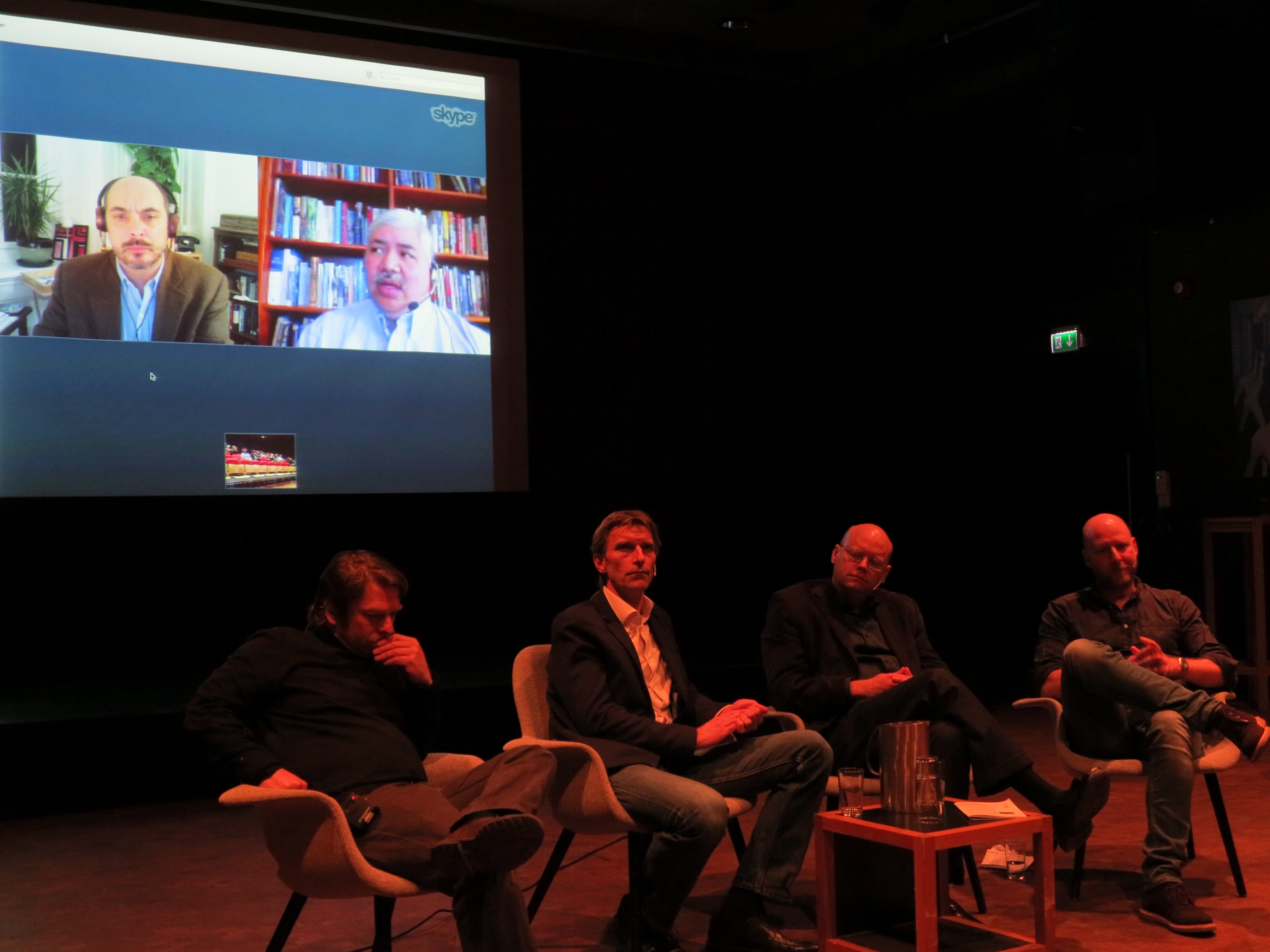
Introduction and panel discussion with human rights experts and interrogators from the 2015 Oslo Human Rights / Human Wrongs Festival (51:54).
Testimonials
I was lucky enough to see this in Chicago; it's one of the best
marriages of technology and narrative that I know of... a smart
use of the technology in the service of the story, and a story
that transcends the technology. The result is a profound
docu-drama / memoir that engages the viewer in a visceral as
well as intellectual way, and it really does haunt you long
afterwards.
The combination of computer-game-like artificiality in the
setting and the documentary realism of the narrating voice is
uncanny. This uncanny-ness creates a cognitive dissonance in
which we are both estranged from and immersed within a
performance of the space of violence and trauma. Our agency is
suspended; we are left with nothing to do but look and listen.
Recognition
During the 2016 Electronic Literature Organization conference
in Victoria, British Columbia, Hearts and Minds: The
Interrogations Project received the 2016 Award for
a Work of Electronic Literature, the field’s top prize
for a creative work.

At ISEA 2016 HONG KONG CULTURAL R>EVOLUTION, the project was
one of four works selected for the juried exhibition of VR
artworks in the Gallery 360 theatre at City University of Hong
Kong.

Official Selection, 2016 BIFF-EXPANDED, exhibition of
works of expanded cinema, Bergen International Film Festival,
Bergen, Norway.